
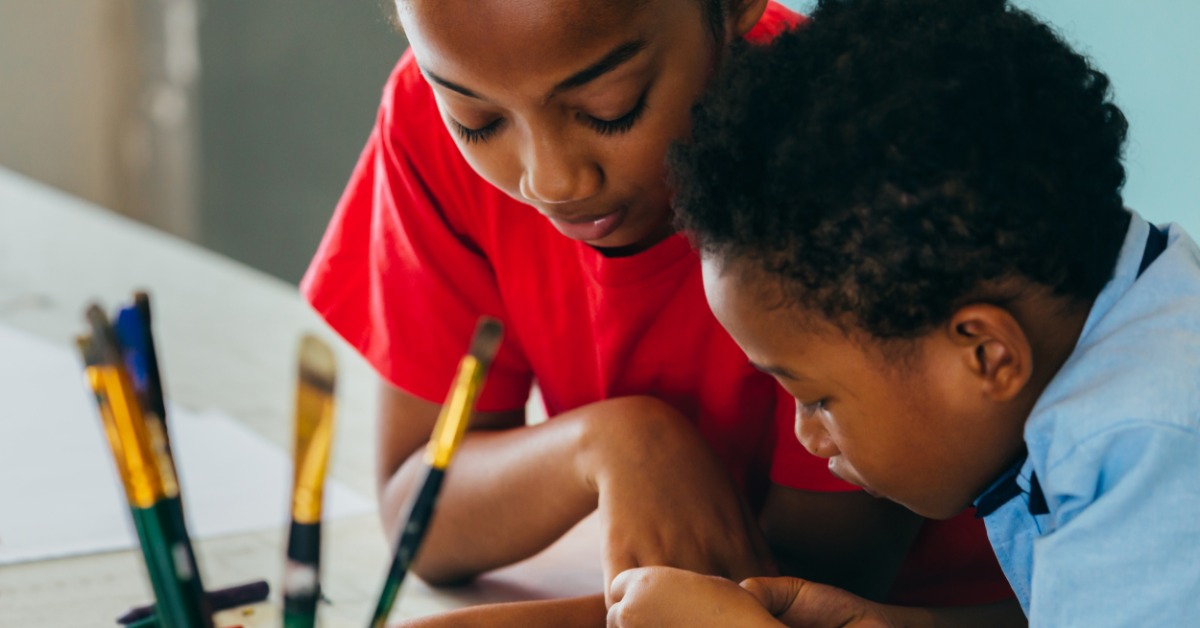
Craft time rarely looks quiet or orderly. Markers lose their caps, scraps of paper migrate to the floor, and somebody always wants the one pair of scissors another kid already grabbed. That little bit of chaos can create useful opportunities to practice patience and cooperation.
Making something together naturally encourages kids to listen to each other and work through small disagreements. They also learn that they won’t always get first choice of a tool or material. The right project makes those lessons part of the fun instead of turning craft time into a lecture.
1. Make a Pass-the-Picture Drawing
This one requires almost no prep, which immediately earns it points from me. Give each kid a piece of paper and let everyone draw for 30 to 60 seconds. When the timer goes off, everyone passes the paper to the next person.
Each child adds something new before passing the drawing again. You can choose a theme such as robots, dragons, aliens, or Minecraft-inspired landscapes. Older kids can make the game harder with one rule: nobody can erase another person’s contribution.
This craft activity gives kids practice taking turns while asking them to give up a little control over the final result. They have to work with whatever the previous artist added instead of starting over. Sometimes that leads to a pretty cool picture, and sometimes it leads to a three-headed chicken wearing rocket boots.
2. Build One Giant Cardboard Creation
Save a shipping box or two and turn them into one big collaborative project. The kids can build a castle, spaceship, arcade game, or superhero headquarters. Choose something large enough that several people can work without constantly bumping elbows.
Assign each child a job, then switch roles after a set amount of time. One kid might draw windows while another cuts out decorations. If everyone wants the same roll of fancy tape, include it in the rotation rather than buying extra supplies.
A large project gives kids room to contribute their own ideas, too. One child may want a castle drawbridge while another insists that every respectable castle needs a dragon parking spot. Finding a way to use both ideas becomes part of the creative challenge.
3. Try a Roll-and-Create Challenge
If your kids like games, bring a die to the craft table. Create a simple chart that connects each number with a drawing or craft action. Rolling a one might mean adding something blue, while rolling a six could mean adding something from outer space.
Each child rolls once and completes the matching challenge on a shared poster or individual project. The random element keeps one person from directing every choice and makes the order easy to follow. Nobody gets to appoint themselves Supreme Ruler of the Glitter because the die gets the final say.
This format also works well when kids have different ages or artistic abilities. Structured play can help kids practice skills they use when interacting with others. ABA therapy also uses play-based activities to work on different play skills, including turn-taking and cooperative play.
Choose prompts that leave plenty of room for interpretation rather than requiring everyone to make the same thing. That way, each kid can approach the challenge at their own level while still participating in the same activity.
4. Make a Nature Collage Together
For a craft that starts outdoors, head to the backyard, a park, or a trail for a scavenger hunt. Look for fallen leaves, small sticks, pine needles, or interesting seed pods that you can collect responsibly. Leave living plants alone and follow any collection rules at the park or trail.
Back home, spread the materials across the table and create one collage as a group. Each child can choose an item and decide where it belongs. Younger kids might make an animal or silly face, while older kids can create landscapes or fantasy scenes.
You can add an extra challenge by choosing a theme before anyone starts gluing. Try an enchanted forest, imaginary creature, or tiny campsite viewed from above. The collecting portion also gives everyone a reason to get outside before sitting down to craft.
5. Design a Board Game From Scratch
This project works especially well for older kids who have outgrown simpler cut-and-paste crafts. Start with cardboard or poster board and design an original game together. Divide up the work so everyone gets a chance to create part of the board or invent a rule.
They can choose almost any theme that interests them. A space-loving kid might design a mission to Mars, while a fantasy fan could create a quest through a dragon-filled kingdom. Minecraft fans can build a blocky board where players collect resources and dodge creepers.
Playing this game gives kids another way to practice taking turns and reveals whether their carefully invented rules worked. Discovering that one brilliant idea completely breaks the game offers a simple introduction to testing and revising a design.
Encourage kids to change the rules after the first play-through if something feels confusing. Game designers test and revise their ideas, too. Kids get to see that changing a project can make it stronger rather than signal that they did something wrong.
6. Try a One-Tool-at-a-Time Maker Challenge
You can adapt almost any craft by choosing one important shared tool. That might be a hole punch, special marker, 3D printing pen, or tablet used for designing a 3D print. Only one child uses that item at a time.
While they wait, the other kids can sketch their next step or work on another part of the project. This approach fits technology-based crafts especially well because many families only have one specialized device. It keeps everyone involved without requiring duplicate equipment.
For a 3D printing project, kids could work together to design name tags, simple decorations, or game pieces. One child can use the design software while another sketches the next idea on paper. Switch jobs after a few minutes so everyone gets hands-on time with the technology.
Keep the Rules Simple
You don’t need an elaborate system to keep a group project moving. A timer, clockwise rotation, or simple “your turn, then my turn” routine usually does the job. Keep the expectations easy enough that kids can focus on creating.
If someone starts getting frustrated, shorten the rotation or give that child another useful task. You can also set the project aside and come back later instead of forcing everyone to finish. Crafting should still feel like something the family wants to do.
The finished project doesn’t need to look Pinterest-perfect, either. A lopsided cardboard castle or bizarre collaborative alien may become the craft everyone remembers because the kids had fun making it together. Sometimes the story behind the project matters more than what eventually lands on the refrigerator.