
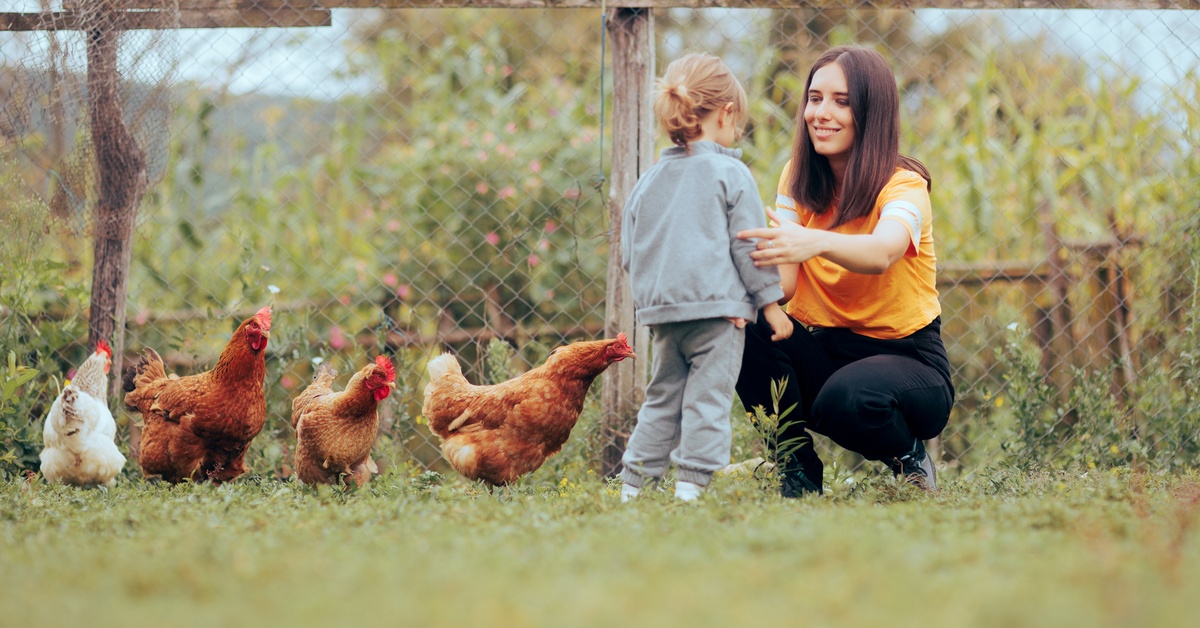
Some days, getting kids outside sounds easier than keeping them interested once they’re there. Mine have always done better when there’s something to investigate instead of a vague suggestion to “go play outside.” Creating a chicken nature study with kids gives them a purpose: watch a living animal closely, record what happens, and turn those observations into a creative project. It’s a little backyard science without making the afternoon resemble school.
Give Your Nature Study a Focus
You don’t need a formal lesson plan to make this work. Pick one question your kids can investigate during each observation session, then give them enough time to find their own answers.
For younger kids, that might mean watching where a chicken goes when she has space to wander. Older kids can pay attention to one bird over several sessions and look for patterns in what she does. A narrow focus makes the activity more interesting because kids have something specific to figure out.
Let Kids Make Predictions
Ask your child what they think will happen before they settle in to watch. Maybe they think a chicken will spend the whole time looking for food, or perhaps they expect her to stay close to the other birds.
Write down the prediction without worrying about whether it’s right. When the observation ends, your child can compare what happened with what they expected. That simple comparison turns chicken watching into a hands-on science investigation.
Make a Chicken Field Journal
Here’s where you can bring the craft supplies outside. Fold several sheets of paper in half, add a cardstock cover, and fasten everything together to make a simple field journal. Let your child decorate the cover with a chicken drawing or give the journal an appropriately dramatic scientific name.
Kids can use one page for each observation session. Encourage them to sketch what they see rather than worrying about creating a perfect drawing. A crooked chicken with giant feet still counts as scientific documentation in my book.
If your child prefers writing, leave room beside the drawing for notes. Adding the date can help kids compare their observations later.
Watch Chickens Being Chickens
You may be surprised by what kids notice when you ask them to sit quietly and watch. Chickens forage by scratching or pecking at potential food sources, and they also naturally spend time preening their feathers. Dust bathing gives kids a memorable behavior to spot as chickens settle into loose material and work it through their feathers.
Have your kids choose one behavior and watch what happens from beginning to end. Instead of writing ‘the chicken scratched,’ they might draw where it happened and record what the bird did afterward.
Try a Behavior Map
Older kids can turn observation into a mapping challenge. Have them sketch a simple overhead view of the chickens’ space, then choose one bird to follow.
They can draw a line showing where the chicken travels during that time. When they finish, ask what drew the bird to certain places. If they repeat the activity another day, they can compare the maps and see whether the chicken followed a similar route.
Turn Observation Into Art
Nature journals don’t have to look like science notebooks. If your kid would rather reach for markers than a pencil, use that interest to keep the project going.
Afterward, let your child create an illustrated portrait of the chicken they watched. Ask them to include details they noticed rather than drawing a generic chicken from memory.
One afternoon, kids might focus on feather patterns. Another day, they could try a close-up drawing of chicken feet. You can also encourage them to label parts of their artwork that caught their attention.
Create a Chicken Behavior Tracker
Once your kids recognize some normal chicken behaviors, give them a simple tracker for their next visit. Keep it short enough that they spend more time looking at chickens than staring at the paper.
They can watch for:
- Scratching or pecking while foraging
- Preening feathers
- Perching above the ground
- Interactions with another chicken
- Sounds that they want to describe later
Notice When Behavior Changes
Close observation teaches kids an important lesson about animals: once they know what’s typical, they can spot changes more easily. If a chicken suddenly stops doing things your kids normally see it do, an adult should take a closer look.
You don’t need to turn your kid’s nature study into a lesson about chicken diseases. Instead, explain that caring for animals means paying attention when a bird stops acting like herself. For example, a bird may eat less when something is wrong or become unusually inactive. Behavior alone, however, can’t tell you the cause.
If your child notices something concerning, you can take over rather than asking them to figure out what’s wrong. That keeps the nature study focused on curiosity while leaving health decisions with the grown-ups.
Adjust It for Different Ages
A 6-year-old and a 14-year-old probably aren’t going to approach this project the same way, and that’s perfectly fine. With younger kids, I’d keep observation sessions short and lean heavily into drawing. Give them one thing to watch so the activity doesn’t become overwhelming.
Older kids can take more ownership. They might compare observations from different days, then write down something they want to investigate next time. If they like technology, they can transfer their handwritten observations into a digital chart afterward, giving that screen time a purpose.
You can also let siblings work on different parts of the same project. One child might sketch while another records behavior, which gives everyone a job without forcing different ages through the same activity.
Keep the Project Going
You don’t need to finish a nature study in one afternoon. A chicken nature study with kids gets more interesting when you return to it because your children can compare each new observation with what they’ve already seen.
Pull the journals out again on another weekend and ask the kids what they want to watch this time. Their questions will probably become more specific as they get familiar with the flock. They may notice a behavior they overlooked the first time or recognize patterns they couldn’t see after one afternoon.
That’s the part I like most about this kind of project. You aren’t handing your kids all the answers; you’re giving them a reason to look closer. Grab some paper, head outside together, and see what your backyard scientists notice when the chickens become the afternoon’s main event.