
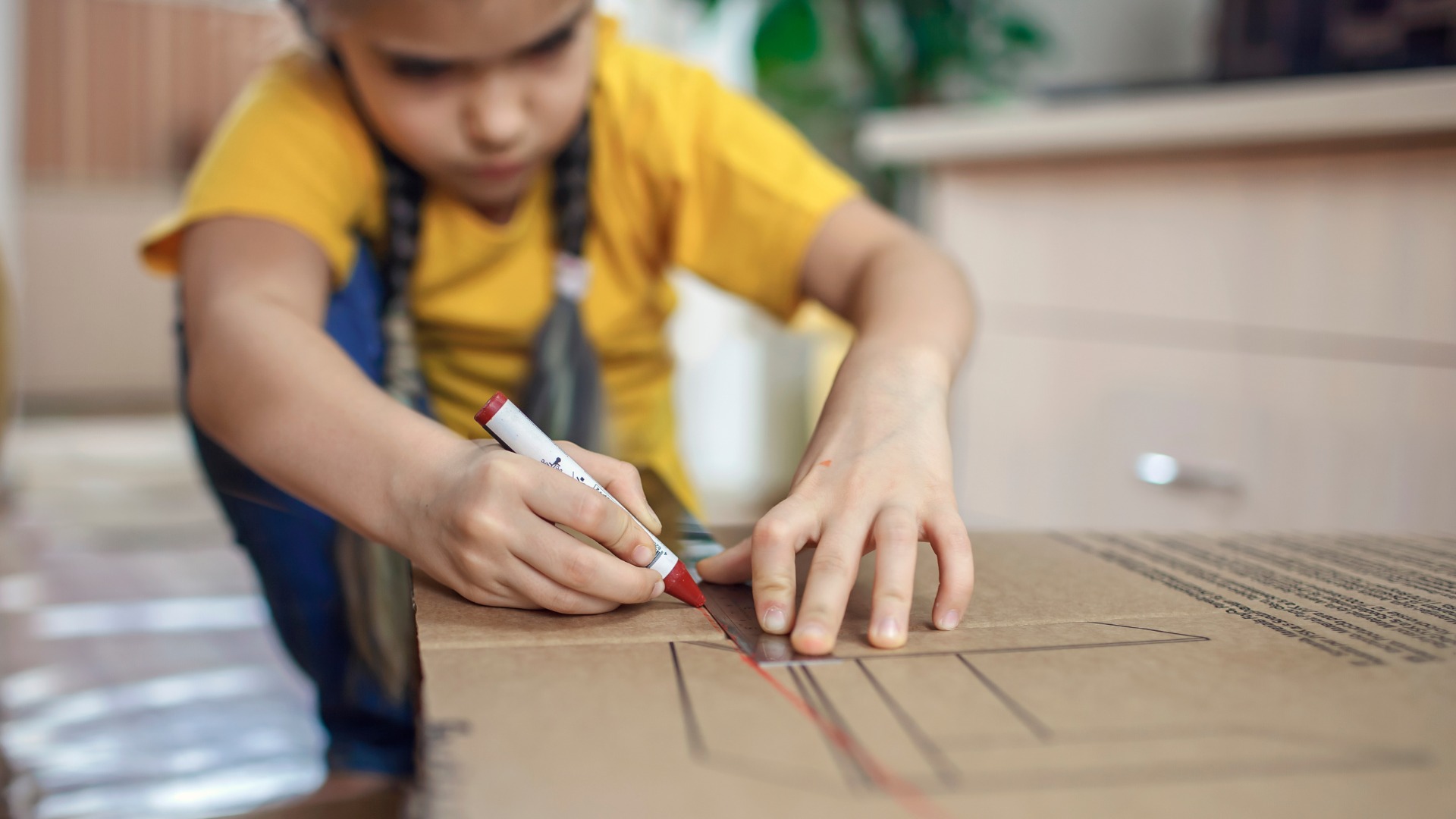
A sturdy cardboard box can be surprisingly hard to recycle. It looks less like packaging and more like a castle waiting to happen—or, in this case, a tiny restaurant on wheels.
Building a tabletop cardboard food truck gives kids a hands-on project that blends art with simple engineering. Younger kids can focus on the signs and decorations, while older kids take on more of the measuring and construction. When the truck is finished, it also becomes a pretend-play prop that can keep the project going well beyond craft time.
It does not need working headlights or a perfectly level counter. It just needs enough tape to make it through the lunch rush.
Gather the Cardboard and Craft Supplies
A shoebox or small shipping box works well for the truck body. Save a few extra pieces of cardboard for the wheels and interior parts.
Gather these basic supplies:
- A shoebox or small cardboard box
- Extra corrugated cardboard
- Thin cardboard from a cereal box
- A ruler and pencil
- Child-safe scissors
- A utility knife for an adult
- Tape or tacky craft glue
- Markers, paint, or colored paper
- Paper fasteners for optional moving wheels
Clean bottle caps and packing scraps can become headlights or small counters. Families who already save interesting odds and ends can also put together a cardboard maker kit for this project and whatever the kids decide to build next.
There is no need to buy special materials. Part of the fun is looking at something headed for the recycling bin and deciding what else it could become.
Plan the Truck Before You Cut
Ask the kids to sketch the truck from the side before anyone reaches for the scissors. They should decide where the service window and wheels will go.
Younger children can make a loose drawing without worrying about measurements. Older kids may want to measure the box and create a more detailed plan.
A quick sketch helps prevent the service window from ending up in an awkward spot. It also gets kids thinking about how the pieces of their design will work together before they start cutting.
Build the Truck Body
Place the box on its side and mark a large service window with a pencil. An adult should use a utility knife to cut along three sides, leaving the bottom edge attached.
Fold the flap downward to make a serving counter. Reinforce the fold with tape so it can handle customers leaning on it while they complain about the imaginary wait time.
Cut four wheels from extra cardboard. Tape them directly to the truck or let older kids attach them with paper fasteners so they can turn.
Fixed wheels are much easier and work perfectly well. Unless the truck has plans to tour the whole house, it does not need to roll.
Design the Tiny Workspace
Now it is time to turn the box into something that feels like a working food truck. Ask the kids what should happen after a customer places an order.
Small folded pieces of cardboard can create a prep counter or storage area. Kids can label each space, then use clean lids or tiny boxes as pretend equipment.
Older kids can take it up a notch by thinking about how a food truck owner would plan their launch before they decide what their model needs and how customers will place an order.
This does not need to become a business lesson. The idea is simply to help kids think critically about how a small space can work well when every inch matters.
Name and Decorate the Truck
Once the basic structure is finished, hand over the markers and let the kids take control. They can choose a name and create a logo that matches the theme.
A fantasy fan might open the Dragon Snack Wagon. A space-loving kid could create Galactic Grub, while a Minecraft fan may want a blocky design that looks ready to serve square sandwiches.
Encourage the kids to create their own look instead of copying a real restaurant. Colored paper can cover the box if paint feels too messy, and handmade signs can hide any rough edges.
Once the tabletop cardboard food truck has a bright sign and a silly menu, it stops looking like an old box. It starts feeling like something the kids actually invented.
Make Menus and Order Tickets
Use index cards or small pieces of paper to create a removable menu. Younger kids can draw the food, while older children add names and pretend prices.
No real cooking is necessary. The truck can serve paper tacos or pom-pom cupcakes, and the chef can invent the rest.
Kids can also make order slips and a small cardboard register. Adding prices gives older children a chance to practice simple math without turning the afternoon into surprise homework.
When the truck opens, family members can take turns ordering or working behind the counter. Be prepared for the chef to insist that everyone try the dragon fries.
Expect a Little Imperfect Engineering
At some point, a wheel may fall off or the serving counter may sag. The window might also end up slightly crooked.
That does not mean the project failed. It usually means the truck needs another cardboard brace or a little more tape.
Try not to take over as soon as something goes wrong. Ask the kids what they think would make the structure stronger, then let them test the idea.
A slightly lopsided model they repaired themselves has more value than one a parent quietly rebuilt after bedtime.
Keep the Building Fun Going
Once the final sign is attached, let the kids open their food truck for business. They can take pretend orders and change the menu whenever the chef gets bored.
The finished project gives children a chance to plan and build something of their own. It also works across several ages because younger kids can handle the creative decisions while older children take on more of the construction.
When the food truck closes for the night, kids who still have building energy can try a few more model-building activities with the leftover supplies.
Store the menus and loose pieces inside the truck before putting it away. The tiny cardboard wheels hiding under the table will eventually turn up—probably right after the recycling truck leaves.