A child’s love for dinosaurs can turn ordinary afternoons into hands-on science moments that mix creativity, curiosity, and family fun.

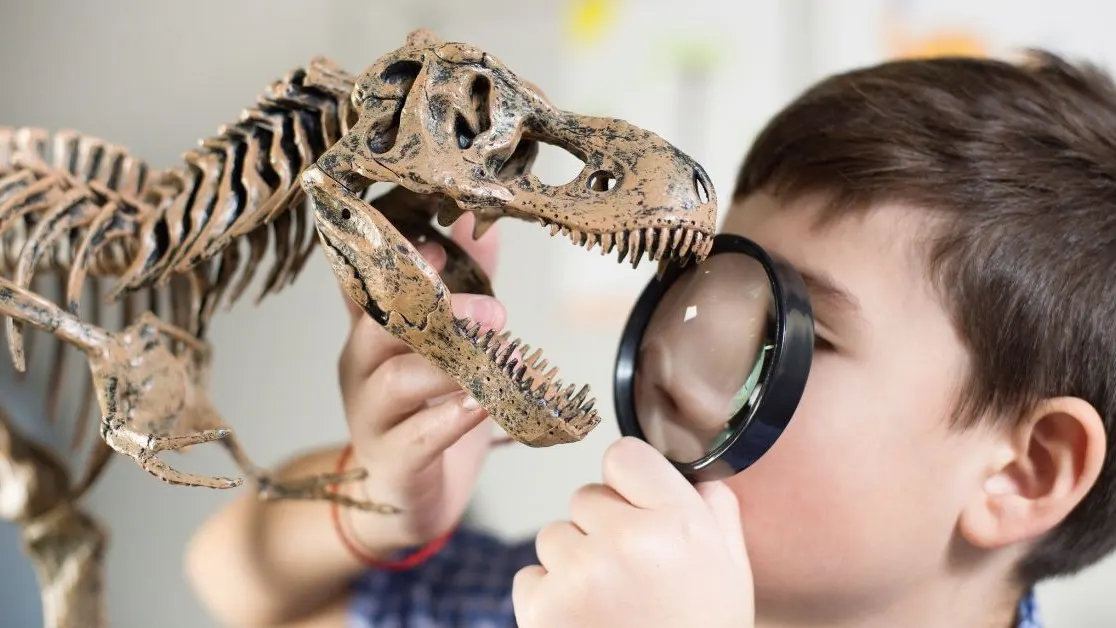
Dinosaurs grab kids’ attention fast. They roar, stomp, and feel just dangerous enough to stay interesting. When you channel that excitement into learning, you get a science lesson that doesn’t feel like they’re in school. When you ignore it, kids often drift back to screens because nothing else competes with that level of “cool.”
You don’t need fancy supplies or a STEM degree to pull this off. You just need a plan that turns dinosaur play into real curiosity. Here are several ways to use dinosaurs to teach kids about science.
Mini Fossil Digs That Teach Real Paleontology
Kids hear the word “fossil” and picture a museum display behind glass. That disconnect makes science feel far away, and when kids can’t interact, they stop asking questions.
Create a mini dig at home by burying toy bones, shells, or dinosaur figures in a bin of sand or dirt. Give kids a paintbrush and a spoon and let them carefully uncover each “find” as if they were on a real excavation site.
During the fossil dig, remind your child that rushing destroys their evidence, while slow, intentional digging builds allows them to observe the animals. This activity also gives you an easy way to talk about how scientists form ideas based on what they find, not what they guess.
Predator vs. Herbivore Activities That Teach Biology
You can also use dinosaurs to teach kids about science by showing them the different diets dinosaurs had—some ate plants, and others ate meat. Exploring what different species ate helps children learn the “why” behind different animal behaviors.
Use quick comparisons to turn play into science thinking. Keep it simple and visual, especially if you have a range of ages at home:
- Compare teeth shapes and match them to diets
- Sort dinosaurs by herbivore or carnivore using pictures or toys
- Look at claws, horns, and armor, and ask what problem each trait solves
- Build a simple food chain and let kids place dinos in the right spots
These activities teach classification and ecosystems without feeling heavy. Kids start noticing patterns, and that skill transfers to modern animals on hikes, at the zoo, or even in your backyard.
Hands-On Models That Make Science Feel Real
Kids struggle with scale, anatomy, and habitat when everything stays in books. That frustration leads to disengagement. Kids stop listening because they can’t picture what you describe.
One of the top reasons dinosaur toys benefit homeschool lessonsisthat they make science concrete. A detailed model helps kids see body structures, compare sizes, and build habitats that match where a species actually lived. For example, warm temperatures, broad river floodplains, dense forests, and coastal lowlands shaped the environment where T. rex lived.
Try a craft-meets-STEM challenge: build a shoebox habitat for one dinosaur. Add plants, water sources, and terrain that make sense. Then measure the toy and estimate how large the real animal would be compared to a person. Dinosaurs already rule your house, so you might as well let them teach a little science while they’re at it.