
If your craft stash has started reproducing in the closet like Tribbles, it might be time to host a kid craft supply swap at home.
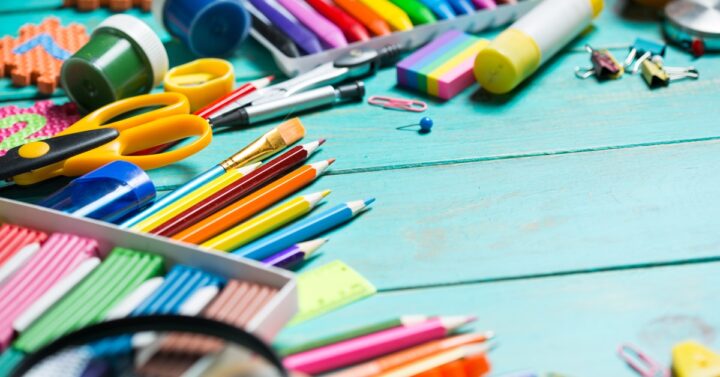
You know the supplies I mean: half-used sticker sheets, lonely pipe cleaners, random beads, cardboard tubes, yarn scraps, and that bag of googly eyes that somehow never gets smaller. A craft supply swap lets kids trade those extras, try new materials, and make something fun without another craft store run.
It is perfect for school-aged kids who like building, drawing, making, tinkering, or turning a cereal box into “something important, Mom, don’t recycle it.”
Invite a Small Group of Crafty Kids
Kids get bored with their own supplies, but another kid’s leftover craft stash feels brand new. One family’s extra yarn becomes a friendship bracelet. A pile of cardboard turns into robot armor. Random buttons become treasure, game pieces, or tiny monster eyes.
A swap is fun for kids of all ages. Younger kids can trade stickers, paper, crayons, foam shapes, and washable markers. Older kids might be more interested in duct tape, beads, fabric scraps, cardboard, clay, model-making bits, or STEM supplies.
It is also a great way to stretch your craft budget. If your kids already love budget-friendly DIY projects, a swap gives them even more materials to experiment with without buying a whole new set of everything.
Keep it simple. Invite three to six families, ask everyone to bring clean supplies they no longer need, and let the kids help decide what looks useful.
Ask Families To Bring Usable Supplies
Before swap day, send a quick message asking families to bring clean, usable craft supplies. A shoebox, grocery bag, or small bin is plenty. Nobody needs to back a truck into your driveway.
Good swap items include:
- Paper, cardstock, stickers, and foam sheets
- Crayons, colored pencils, gel pens, and working markers
- Yarn, ribbon, string, fabric scraps, felt, and embroidery floss
- Beads, buttons, charms, craft gems, and googly eyes
- Craft sticks, pom-poms, pipe cleaners, washi tape, and kid-safe glue
- Cardboard tubes, small boxes, and clean recyclables
- Clay, model-making pieces, and complete mini craft kits
- STEM odds and ends like magnets, bottle caps, wheels, or craft motors
- Kid-safe 3D printer scraps, failed prints, or extra printed pieces
Skip Anything Gross, Broken, or Risky
A swap is only fun if the supplies are actually useful. Nobody wants to bring home dried-out markers or haunted slime from 2019.
Ask families not to bring dried markers, crusty glue, open glitter, sticky slime, rusty items, sharp pieces, moldy supplies, or broken things nobody can fix. Skip tiny choking hazards if younger siblings will be around. Also, avoid half-finished projects that your kid expects another child to magically complete.
This is not about being picky. It is about keeping the swap fun and safe for everyone.
Set Up Simple Supply Stations
Instead of dumping everything into one big pile, sort supplies into simple stations. You can use folding tables, card tables, laundry baskets, shoe boxes, or whatever you already have. Paper signs are enough.
Try stations like:
- Drawing and coloring
- Paper crafts
- Yarn and fabric
- Beads and jewelry
- Cardboard and building
- Nature and recycled materials
- STEM and maker supplies
- 3D printing extras
The stations help kids find what they are excited about without digging through one giant mystery pile. They also make cleanup a lot less dramatic, which is always a win.
Add a Make-It-Now Table
This is what turns the swap from “moms cleaning out cabinets” into an actual kid craft day. Set out scissors, tape, glue sticks, markers, and a few easy prompts so kids can start making something right away.
Kids can build a cardboard creature, make a friendship bracelet, design a bookmark, decorate a mini box, create a robot from cardboard and bottle caps, or invent a tiny game piece. If your kids are curious about 3D-printed toys, extra pieces or small failed prints can become spaceship parts, monster horns, or accessories for a new project.
Older kids can help run stations, sort materials, or make sample projects for younger kids. Some kids love organizing things when it is not their own bedroom. I do not understand the science behind that, but I accept it.
Keep the Mess in One Place
Crafts are messy. Kids are messy. Creativity is messy. That does not mean the entire house has to surrender.
Choose one swap area that can handle temporary chaos: a kitchen table, basement, garage, covered porch, or family room with washable surfaces nearby. Put down a plastic tablecloth, butcher paper, or flattened cardboard if glue and markers are involved.
For families who host craft days, science builds, Scout projects, and rainy-afternoon experiments, having a space that changes with your family can make creative messes easier to enjoy without letting them take over dinner, homework, and everything else.
Even if you are working with one table and a prayer, boundaries help. Keep snacks away from the glue, put messy supplies in one zone, and set a cleanup timer before everyone leaves. Do not open glitter unless you are emotionally prepared to find it again at Christmas.
Send Kids Home With a Plan
Give each child a bag or small box labeled with their name. Kids can add supplies they want to take home, but encourage them to choose things they will actually use.
A good rule is to take enough for two or three projects, not enough to open your own craft warehouse.
You can also set out index cards so kids can write project ideas for the supplies they choose. This helps prevent the classic “why did I bring home 42 buttons and one purple felt square?” problem.
For leftovers, keep a small rainy-day craft bin or donate usable supplies to a teacher, Scout troop, library, or after-school club. Recycle what you can and toss anything that has reached the end of its crafty little life.
Make the Next Swap Even Easier
Once you know how to host a kid craft supply swap at home, it becomes an easy thing to repeat before summer break, winter break, or the start of a new school year. Those are the times when kids need fresh ideas, parents need affordable activities, and everyone is pretending the craft cabinet is not a danger zone.
It does not have to be perfect. The kids do not need matching bins. Your house does not need to look like a craft blogger lives there. You just need a few families, some usable supplies, and enough room for kids to make something wonderfully weird.
Which, honestly, is my favorite kind of craft day.