
You know what’s better than telling kids to “go do something creative” while they stare at you like you just assigned extra homework?
Handing them a project that uses things they already love: LEGO bricks, action figures, cardboard, weird little storylines, and, yes, a phone or tablet.
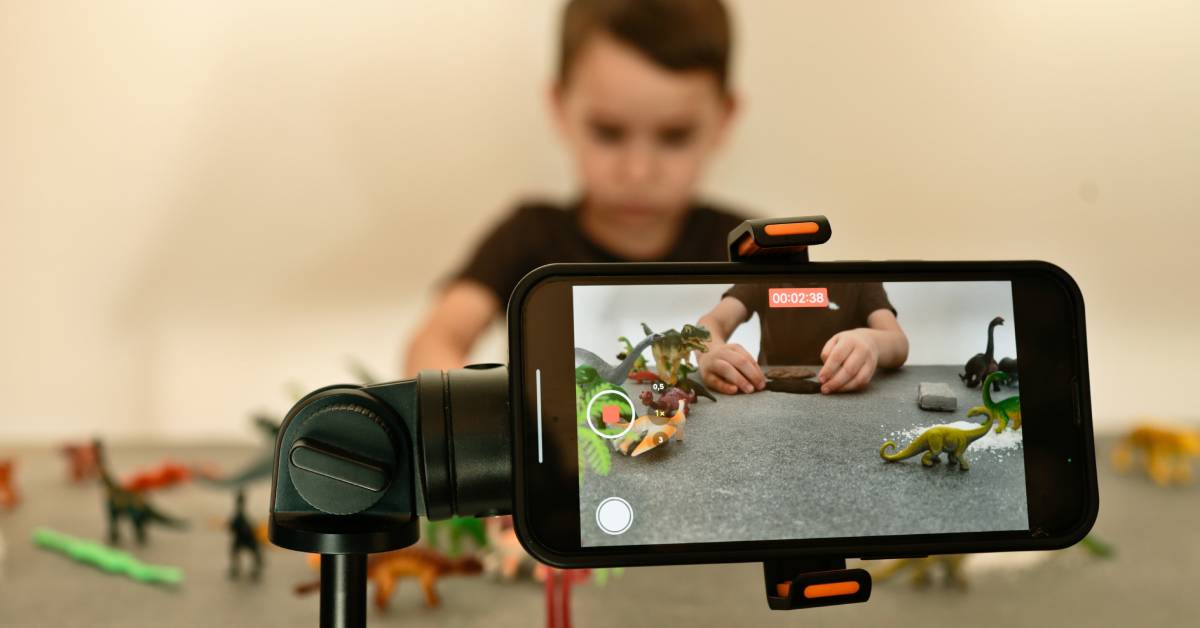
Building a basement stop-motion studio with kids sounds fancy, but it really just means gathering craft supplies and letting them make a tiny movie one photo at a time. It feels like screen time, but it’s also crafting, storytelling, problem-solving, and a little bit of movie magic.
If you have a basement, rec room, or lower-level corner where kids can spread out, you already have a good spot for it. Will it look like Pixar moved in? Probably not. Will someone’s LEGO guy fall over 47 times? Absolutely. That’s part of the charm.
Choose a Tiny Movie Idea
Before the kids start dumping every toy bin onto the floor, help them pick a very small movie idea.
The key word is small. Stop-motion takes more patience than kids expect, so a 20-second movie is a totally respectable masterpiece. We are not filming the next superhero trilogy here. We are filming “Dinosaur Escapes Shoebox Volcano” and calling it a win.
Try one of these simple ideas:
- A LEGO hero saves the day.
- A clay alien lands in the basement.
- A cardboard robot learns to dance.
- A toy car race goes terribly wrong.
Older kids can sketch a quick beginning, problem, and ending. Younger kids can just tell you what happens next while they move the characters around.
Either way, the weirder the plot, the better.
Gather Your Supplies
You do not need a fancy kit to make stop-motion work. Half the fun is using whatever is already in the house.
Start with the basics: LEGO bricks, action figures, dinosaurs, cardboard boxes, construction paper, markers, tape, scissors, craft sticks, pipe cleaners, modeling clay, sticky tack, a desk lamp, and a phone or tablet. A tripod is nice, but a stack of books works too.
This is also a great way to use up the “good trash” kids insist on saving. Empty cereal boxes, paper towel tubes, and shipping boxes can become castles, caves, spaceships, city streets, or secret lairs.
If your kid has ever said, “Wait, don’t throw that away, I need it,” this is their moment.
Build a Simple Set
Once they have supplies, let them build a small set. A shoebox can become a movie stage. A cardboard flap can become a wall. Construction paper can become sky, grass, lava, space, or whatever mysterious planet your kid just invented.
A few easy set ideas:
- Cotton ball clouds or smoke
- Pipe-cleaner trees
- Craft-stick bridges
- Paper doors and signs
- Clay rocks, monsters or alien eggs
This is where the project really becomes a craft, not just a tech activity. The movie is the excuse. The making is the point.
Kids who like drawing can design the backdrop. Kids who like building can handle the structures. Kids who enjoy being in charge can become the director, which they were probably going to do anyway.
Set Up the Basement Studio
A basement works well for stop-motion because the project can stay set up longer than it could on the kitchen table. Nobody wants to move a half-finished cardboard castle because it’s time for dinner.
Pick a table, floor mat, or low shelf where kids can work without blocking the whole room. Then do the practical mom check before the director starts yelling, “action.”
Before the kids take over the lower level with tripods, LEGO scenes and cardboard backdrops, check for musty smells, damp corners, or other signs of basement moisture so paper sets and cardboard castles don’t end up in a soggy little disaster zone.
Keep the setup simple:
- Move cords out of walking paths.
- Add a lamp if the room is dim.
- Wipe down the table or floor area.
- Keep drinks away from the phone or tablet.
- Give kids a bin or laundry basket for cleanup.
Nothing ruins movie magic faster than stepping on a tiny plastic sword in bare feet. Ask me how I know.
Use the Screen as a Creative Tool
This is the part I love: stop-motion lets kids use technology to create instead of just consume.
A phone or tablet becomes a camera. The screen becomes a tool. The kids become directors, set designers, engineers, writers, and occasionally very dramatic voice actors.
If your family is trying to balance screens with hands-on activities, this project fits right into creative play because kids still get the fun of tech, but they have to build, plan, move, test, and problem-solve to make it work.
The basic process is easy:
- Set up the phone or tablet so it does not move.
- Take one picture.
- Move the character a tiny bit.
- Take another picture.
- Repeat many, many times.
- Play it back and watch the magic happen.
Most stop-motion apps are simple enough for older kids to figure out quickly. Younger kids may need help tapping the button and remembering not to kick the table every three seconds.
Once they understand the basics, they can try a few movie tricks: use the same lamp, tape the tripod or book stack in place, move characters in teeny tiny steps, use sticky tack to keep figures upright, and make paper title cards with markers.
If a character falls over mid-scene, don’t panic. Sometimes the bloopers are the best part. Call it a plot twist and keep going.
Let Kids Own the Chaos
It is very tempting to help too much.
Resist.
Let the backdrop be crooked. Let the story make no sense. Let the superhero ride a dinosaur through a cardboard taco stand if that is where the creative process takes them.
The goal is not a polished film. The goal is for kids to make decisions, solve problems, and see an idea turn into something real.
If you have multiple ages working together, give everyone a job. Younger kids can make props. Older kids can run the camera. Detail-loving kids can build sets. Storytelling kids can plan scenes. Techy kids can edit. Loud kids can do sound effects, because they were going to anyway.
For Minecraft fans, this is also a fun bridge between digital and hands-on creativity. They can build a blocky world out of cardboard, paper, or bricks, then turn it into their own adventure.
Host a Family Premiere
The best part of building a little basement stop-motion studio is watching the final movie, even if it is only 12 seconds long and took an entire afternoon.
Make it an event. Dim the lights. Grab popcorn. Let each kid introduce their film like they are at a very exclusive basement film festival.
Then give out silly awards:
- Best Monster Voice
- Most Dramatic LEGO Fall
- Best Use of Tape
- Funniest Accident
If the kids are proud of their movie, save it and send it to their grandparents. Grandparents love this stuff.
Keep It Fun, Not Perfect
A basement stop-motion studio does not need to be fancy. It just needs a little space, a few craft supplies, some patient kids, and a parent willing to let the creative mess happen for a while.
The real win is not the movie. It is the building, testing, laughing, problem-solving, and watching kids use technology for something more interesting than scrolling.
Today, it is a cardboard robot movie. Tomorrow, it might be animation, engineering, filmmaking, design, or a kid who realizes they can make the thing they imagined.
That is worth a little basement chaos.