
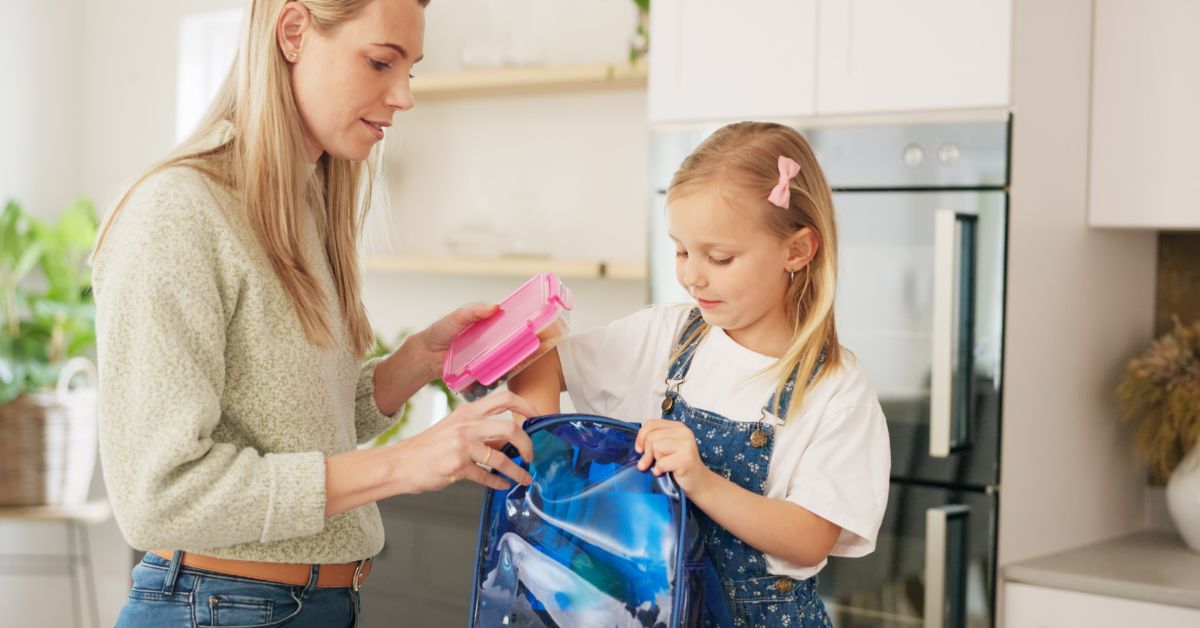
You know those school mornings when your kid says, “I packed everything,” with the confidence of a tiny CEO, and then you find the homework folder sitting on the kitchen table five minutes after the bus leaves?
Same.
School mornings have a lot of moving parts, and repeated reminders can turn into background noise fast. That is where this little craft comes in. We are going to make a backpack checklist that kids will actually use because they get to help design the card and choose where it goes. It is a simple flip book made from index cards, a binder ring, and whatever markers and stickers your kid can dig out of the craft drawer.
Part craft project, part school-day sanity saver, and completely screen-free. My favorite kind of mom win.
Gather the Supplies
You probably already have most of this floating around your house, but probably in three different drawers.
Gather:
- Index cards or cardstock
- A hole punch
- A binder ring, key ring, or small carabiner
- Markers, colored pencils, or crayons
- Stickers
- Washi tape
- Clear packing tape or self-laminating sheets
- Scissors
Your kid will help pick the card colors, choose the stickers, punch the holes (with help), and decide which reminders deserve a spot in the flip book.
If your markers and scissors have achieved full junk-drawer status, setting up a simple kid-friendly craft station can make quick projects like this much easier to start.
Choose the Cards
Sit down with your child and think through the moments they tend to forget things. Do not make 47 cards. I know it is tempting. As moms, we love a system. But if the flip book gets too long, your kid will treat it like assigned reading and ignore the whole thing.
Start with five to eight useful cards. Some good options include backpack, homework folder, lunchbox, water bottle, library book, gym shoes, instrument, Chromebook charger, after-school plan, bus reminder, or “bring lunchbox home.”
Keep the wording short enough to read at backpack speed. Instead of writing, “Please remember to put your completed homework folder inside your backpack before leaving for school,” just write “Folder” or “Homework in backpack.” Short. Clear. No lecture hiding inside the cardstock.
Classrooms often use visual schedules and transition supports to help kids understand what comes next, and this little backpack version turns that idea into a craft they can own.
For younger kids, use pictures along with words. Draw a lunchbox, water bottle, shoe, book, or bus. For older kids, keep it more discreet with smaller cards, neutral colors, or a set tucked inside a binder or pencil pouch.
Decorate the Cards
This is the part that makes it feel like a craft instead of a mom management tool.
Let your child take the lead on decorating each card with stickers, doodles, washi tape borders, tiny comics, color coding, or whatever makes them smile. If your kid wants to draw a dragon guarding the homework folder, let the dragon do its job.
You can color-code by time of day, make each card a different theme, or keep the whole set simple and clean for an older kid. The important thing is that they recognize the cards and want to use them.
You are not trying to make the prettiest checklist on the internet. You are trying to make a backpack checklist your kid will actually use on a regular Tuesday morning.
Clip It and Try It
Once the cards are decorated, let your child stack them in the order they want to use them. Morning cards can go first, followed by school-day cards, after-school cards, and anything they need to remember on the way home.
Punch a hole in the top corner of each card and slide them onto a binder ring. If you want the cards to last longer, cover them with clear packing tape or self-laminating sheets before punching the holes.
Then have your child choose where to keep the ring: inside the backpack, on a zipper pull, in a homework folder, inside a locker, or near the backpack drop zone. If your kid is easily distracted by dangly things, clip it inside the backpack instead of outside. We are trying to remember the folder, not create a new hallway toy.
Do a test run on a day when there is no school or extra time in the morning. Sunday afternoon is great. Have your child pack the backpack while flipping through the cards.
You can say, “Show me how your checklist works,” instead of listing every single item yourself. Once your child knows the system, try saying, “Check your backpack cards,” or “Anything left on your ring?” That gives the responsibility back to them without tossing them completely into the deep end.
Make It Fit Your Kid
One nice thing about this craft is that it can grow up or down depending on your child.
Younger kids might need five picture cards with big drawings and bright stickers. Big kids might want cards for band, sports, homework, library day, or charging a school device. Tweens and teens may prefer a planner insert, pencil pouch card, or sports bag checklist that does not look like something made for a little kid.
The trick is to make the tool match the child, not the other way around. If a card feels confusing, change it. If there are too many cards, remove some. If your kid says, “I don’t need this one,” and you know they absolutely do, maybe rename it or let them redesign it.
Try More Flip Book Ideas
Once your kid gets the hang of the backpack checklist, you can make other flip books for different parts of family life. Try a sports bag checklist, Scout camping gear ring, sleepover packing list, after-school routine ring, or road trip activity set.
When this project sparks another round of cutting, coloring, and sticker chaos, these fun and creative crafting hobbies can keep the kitchen table busy a little longer.
Count the Win
This backpack checklist will not magically make every school morning peaceful—I wish. If cardstock and stickers could do that, I would wallpaper my entire house with them.
But it can give kids a little more ownership over their day, cut down on a few repeated reminders, and use up some of those craft supplies multiplying in the drawer. That counts as a win in my house.
So grab the index cards, hand over the stickers, and let your kid make a checklist they might actually use.