
Last Updated: March 2026
Looking for a quick STEM activity that actually works? My son Mitch and I first built this popsicle stick catapult years ago at a Magic House maker workshop, and honestly, we’re still obsessed with it. Whether you’re a homeschooler looking for a physics lesson or just a “Tech Mom” (like me!) trying to get the kids off screens for twenty minutes, this “Spoon-a-pult” is a classic for a reason.
Why this design works: Unlike some complicated DIY catapults, this version only requires a couple rubber bands and zero glue. It’s the perfect “junk drawer” engineering project. We’ve tested dozens of variations over the years, and this specific stack-and-lever method provides the most consistent upward thrust for indoor “target practice.”
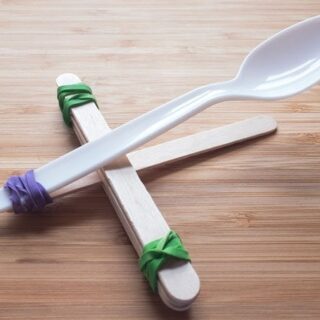
Design this Easy Catapult with craft sticks, a spoon and rubbers bands
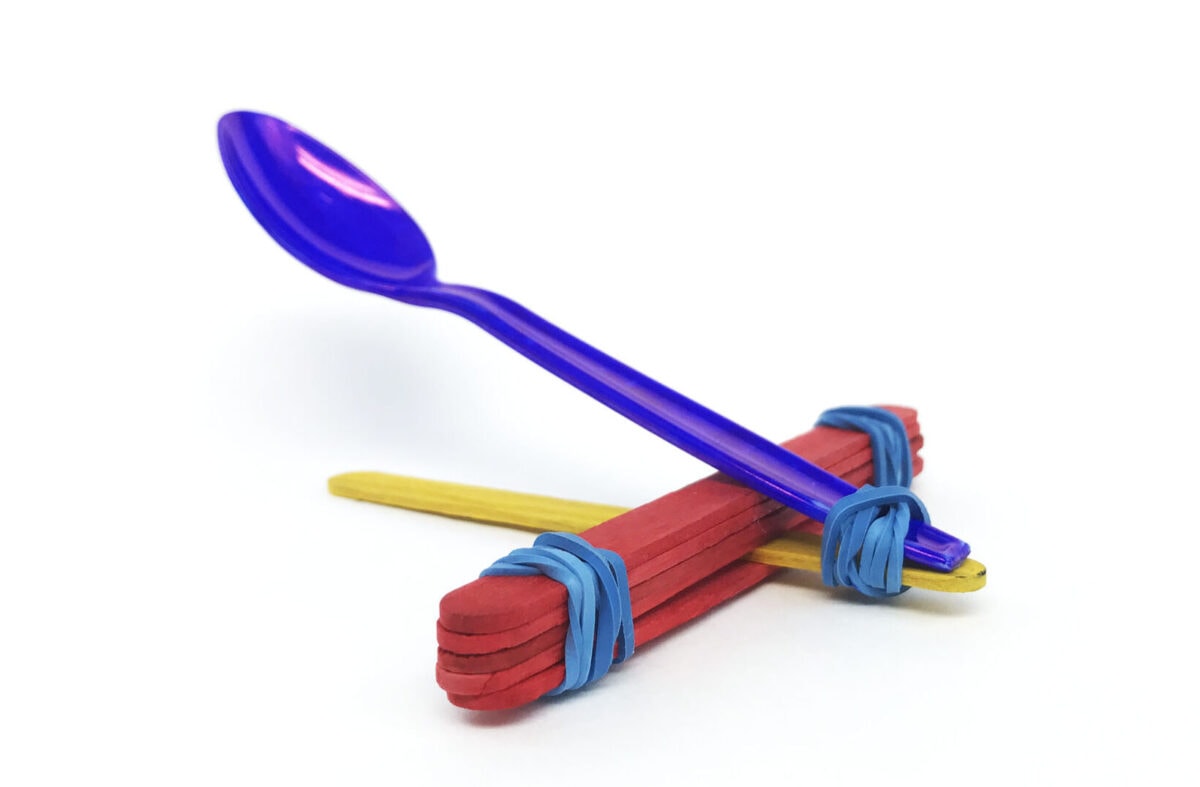
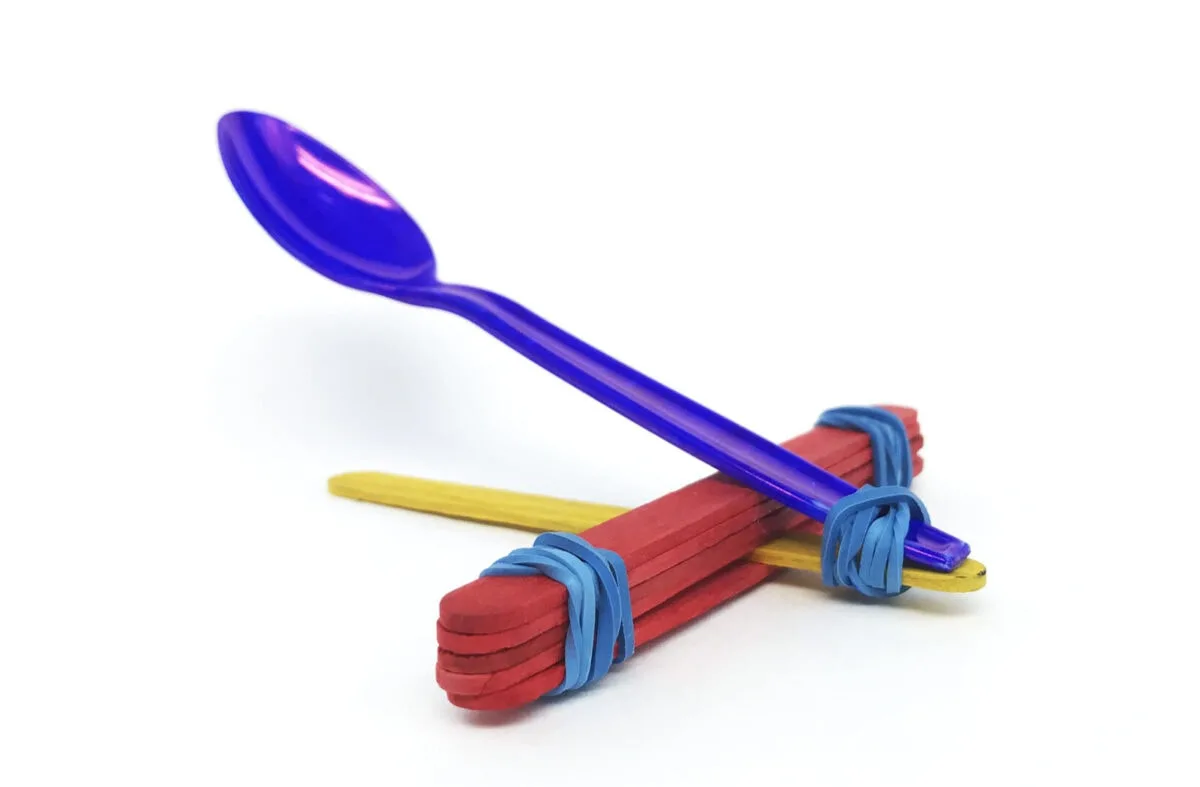
We first ran into this popsicle stick catapult design at the Magic House maker workshop. The idea is pretty simple and there’s lots of variations. Try out a few and run some tests to see which one works best–like our Spoon-a-pult 2.0!
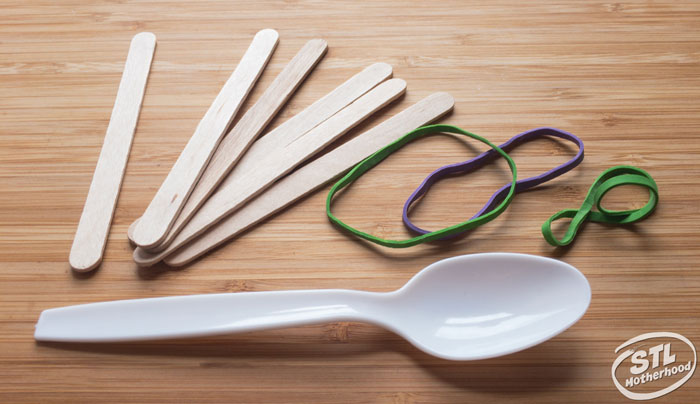
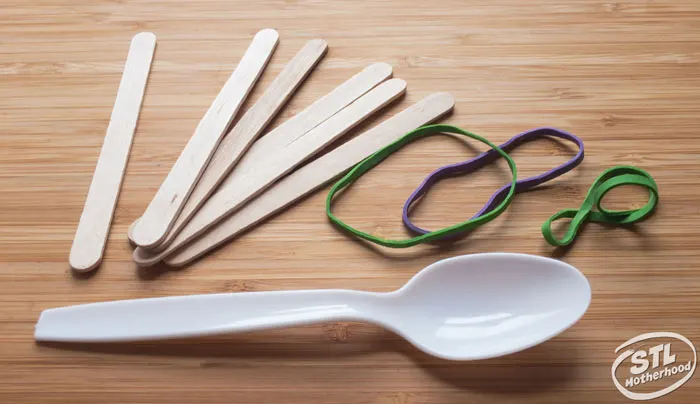
This design is easy and the spoon holds your projectile pretty well. It only takes 3 rubber bands, which is especially handy if you’re rummaging through your junk draw to find crafting supplies.
Let’s begin!
Build a Catapult with Popsicle Sticks and a Spoon
Materials
- Craft sticks (they also come in cool colors)
- Spoons
- Rubber bands
- Foil (makes great ammo)
Tools
- Your hands!
Instructions
- Take 5 sticks and stack them, securing one end with a rubber band. You'll need to wrap the rubber band around several times to make it nice and secure.
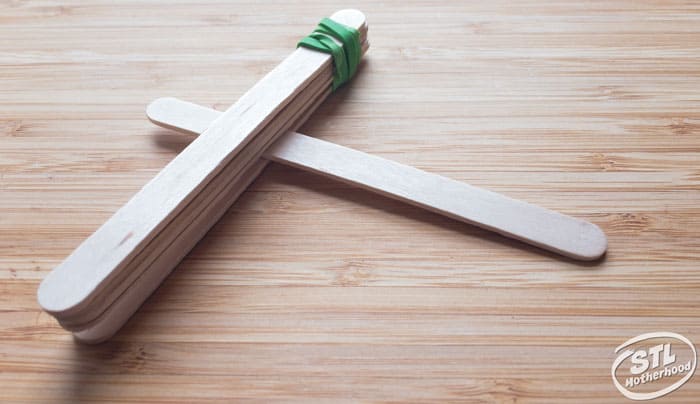
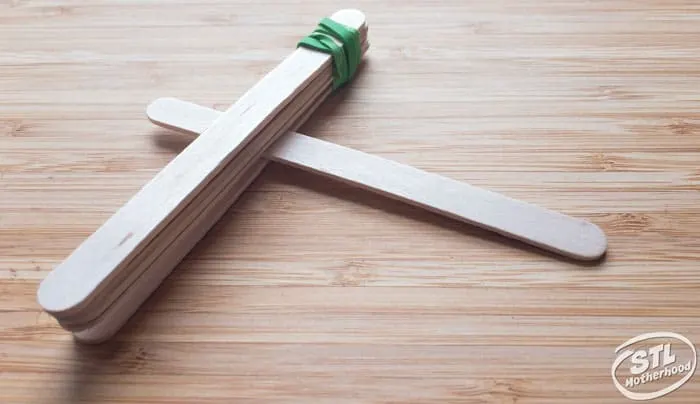
- Slide one more stick between the bottom stick and the rest of the stack.
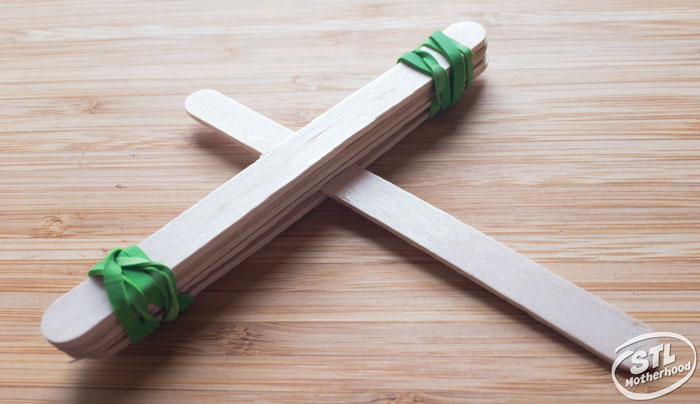
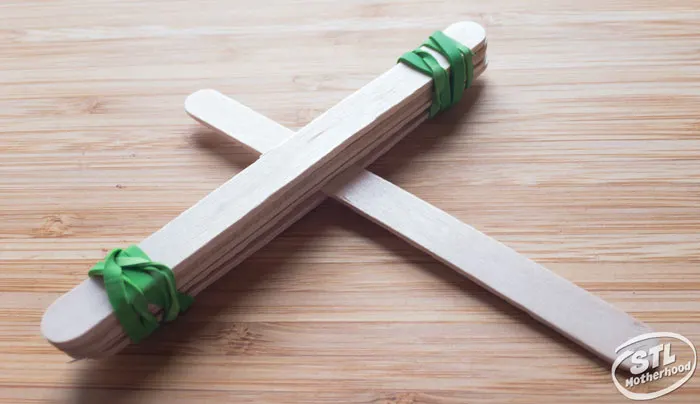
- Secure the other end with a rubber band.
- Place the spoon on top, and attach the end of the spoon to the end of the single stick with the last rubber band.
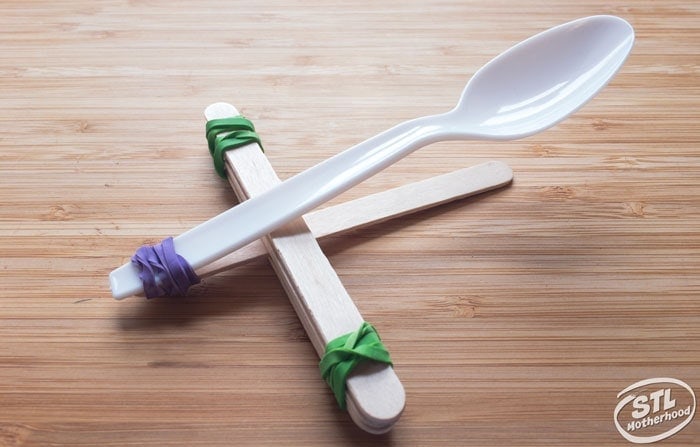
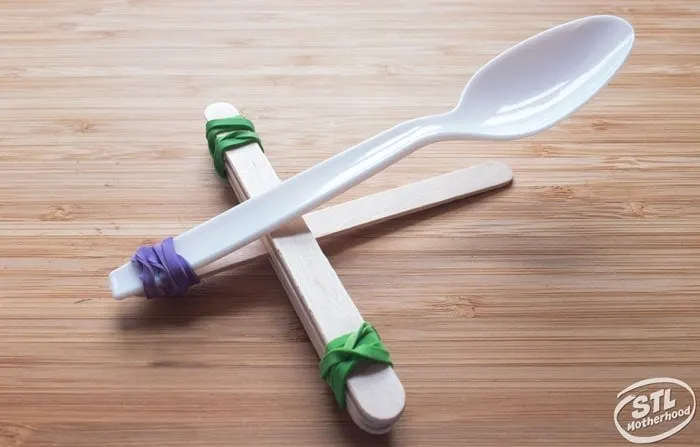
Notes
Crumpled balls of foil and small marshmallows make excellent projectiles for this style of catapult.
Recommended Products
As an Amazon Associate and member of other affiliate programs, I earn from qualifying purchases.


Tada! That was easy!
Make Projectiles for Your Catapult
You can experiment with different kinds of projectiles for your popsicle catapult–really anything that can fit on the spoon will work. Mitch and I tested all kinds of things–wads of paper, super balls, foam balls, foil balls or rocks (if you’re outside).
Because this is meant to be an indoor project, I recommend making aluminum foil balls. They have just the right amount of weight to travel far, aren’t round enough to roll under the couch and won’t hurt anything that accidentally gets in the way.
Marshmallows are also great for catapult flinging!
Mitch and I made a little video if you want to see how it’s built and little demo at the end. Enjoy!
This catapult has a lot of upward thrust–not a very good distance shooter. It’s great for younger kids to build because it’s so very simple.
Build a BETTER Catapult
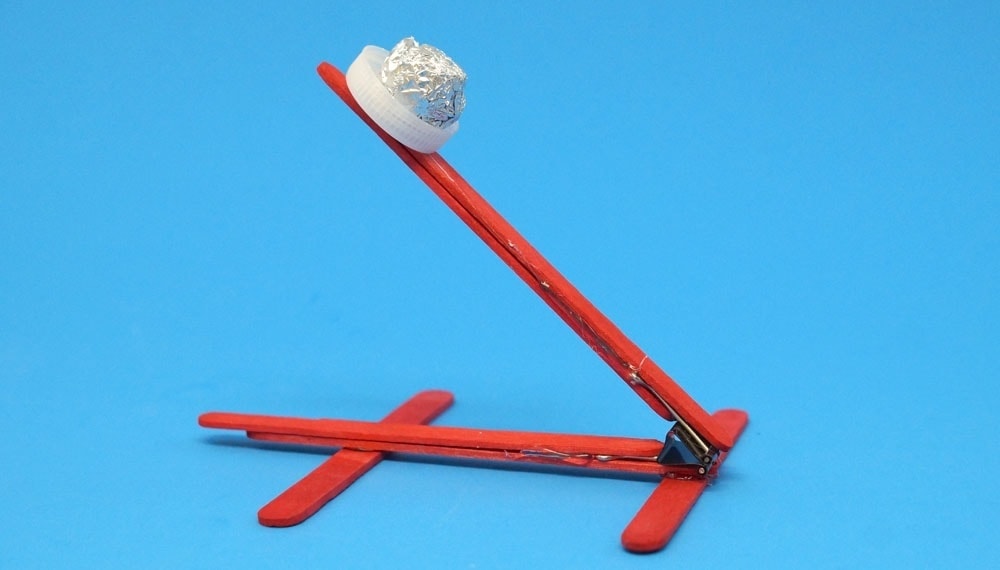
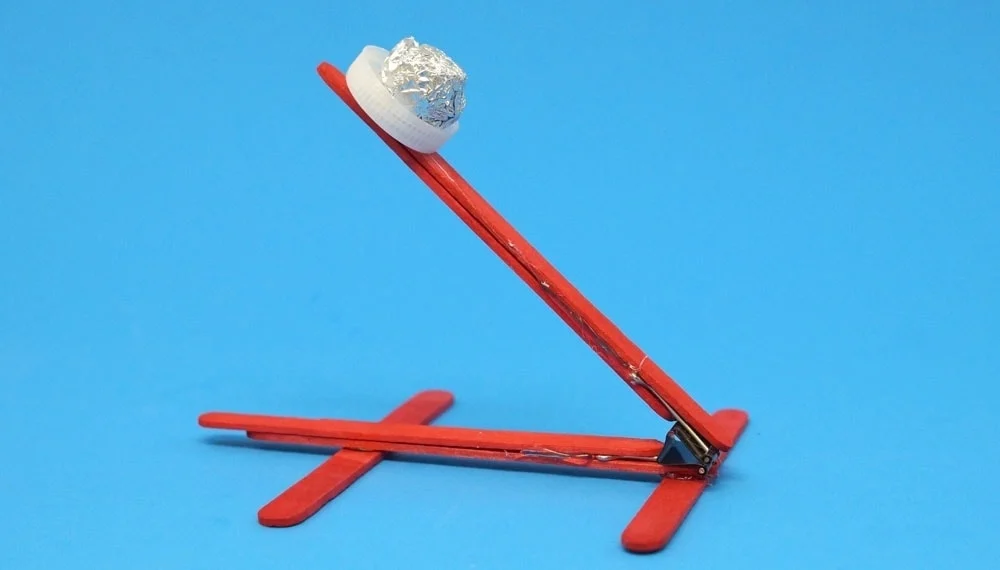
Mitch and I have been working on improving our catapult designs — check out the Binder-a-Pult 2000 with a range of 20 feet!
Make it Bigger with Pool Noodles
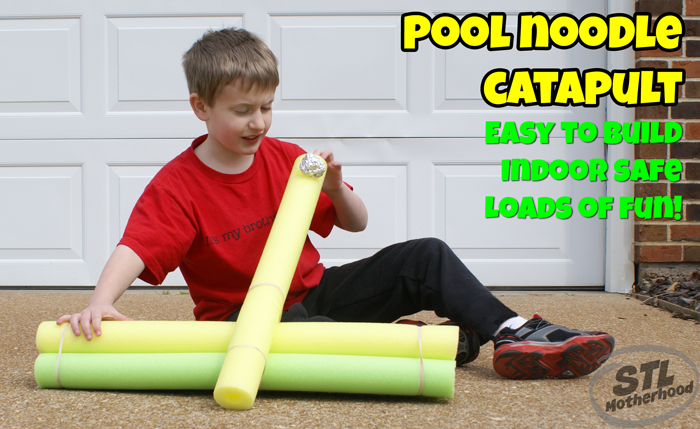
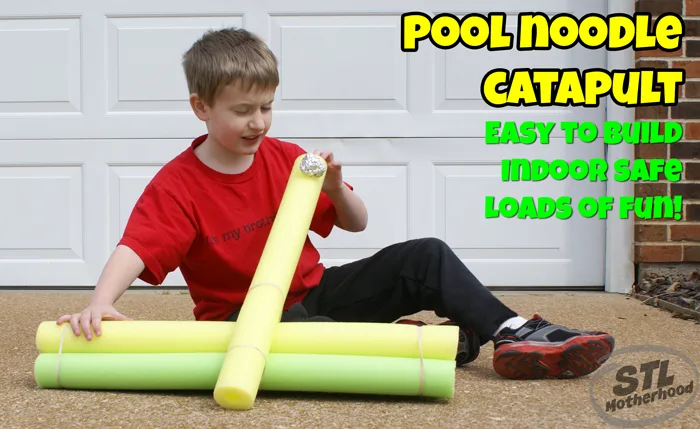
Mitch and I also made a super easy catapult from pool noodles! This contraption is pretty cool for little kids to make and because the pool noodles are so flexible it doesn’t throw anything very hard. Perfect for indoor play once summer is over!
Frequently Asked Questions (FAQ)
- Why is my popsicle stick catapult not shooting far? The power of this catapult comes from the “tension” of the rubber bands and the height of the stick stack. If it’s underperforming, try adding 2 more sticks to the middle stack. This increases the angle of the lever, creating more potential energy and a more powerful launch.
- What is the best projectile for a spoon catapult? For indoor play, we found that crumpled aluminum foil balls are the gold standard. They have enough weight to catch the “flick” of the spoon but aren’t heavy enough to break a window. Mini-marshmallows are a close second, though they tend to bounce under the couch!
- How do you explain the science behind this catapult to kids? This is a great lesson in Potential and Kinetic Energy. When you pull the spoon back, you are storing potential energy. When you let go, that energy is converted into kinetic energy (motion). It’s also a Class 3 Lever, where the effort is between the fulcrum (the rubber-banded end) and the load (the projectile in the spoon).
- Can I use glue instead of rubber bands? We don’t recommend it for this specific design. Glue is rigid and can snap under the pressure of the “flick.” Rubber bands provide the flexibility and “spring” needed for the lever to function properly. Plus, using rubber bands makes it much easier to take apart and tune for better distance!